- Shooter
Game
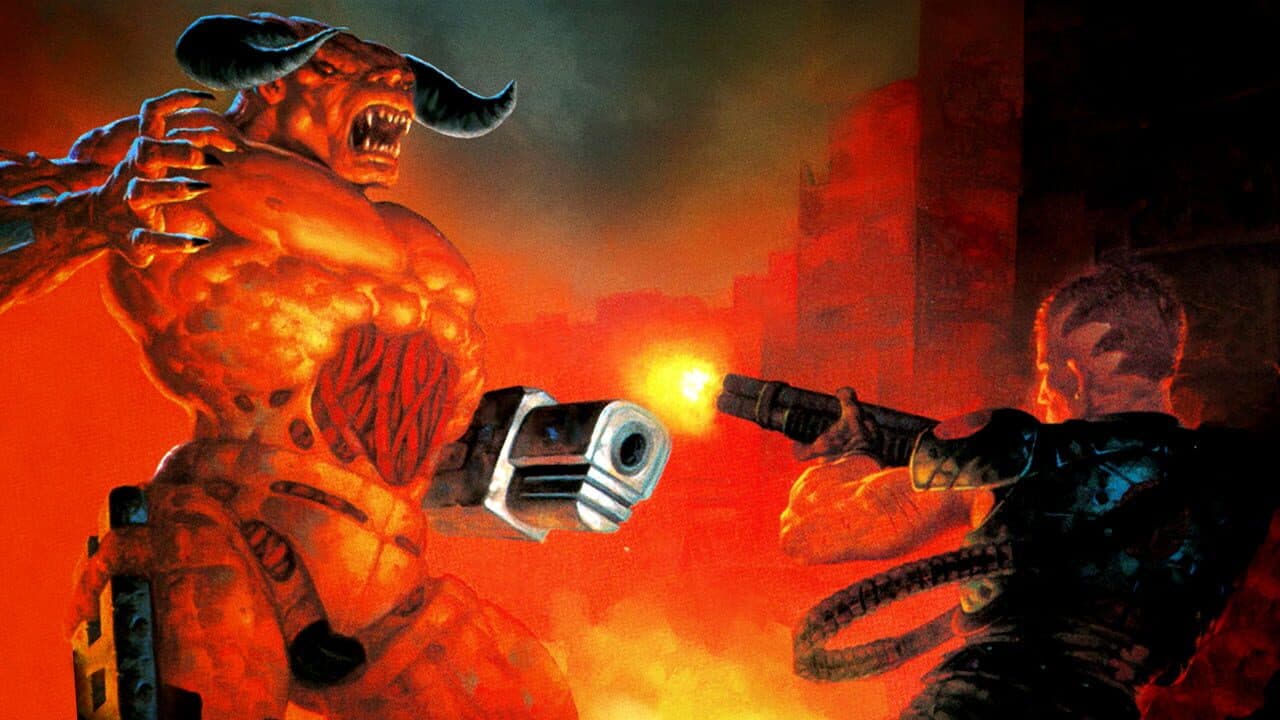
Doom II: Hell on Earth
Doom II: Hell on Earth is a first-person shooter developed by id Software and released in 1994 as a sequel to the original Doom. The game continues the story, with players battling through Earth after it has been invaded by demonic forces. Gameplay remains similar to its predecessor, featuring fast-paced combat, maze-like levels, and an array of weapons, including the introduction of the powerful Super Shotgun. Doom II also adds new enemy types, such as the Arch-vile and the Mancubus, increasing the game's challenge. Initially released for MS-DOS, Doom II has since been ported to numerous pl
About Doom II: Hell on Earth
- Released
- September 1994
- Developer
- id Software
- Publishers
- Imagineer, Virgin Interactive Entertainment (Europe) Ltd., GT Interactive Software, Bethesda Softworks, Tapwave
- Engine
- id Tech 1
- Series
- Doom
- Platforms
- PC-9800 Series · Tapwave Zodiac · PC (Microsoft Windows) · Mac · DOS
Where to get it
Release, studio and platform data from IGDB. Store links go to the sellers, not to us. We do not sell games and we do not host files.
Browse everything
Sorted, filterable and paged. Every link goes to the author’s own download.
- Mods indexed
- 7
- Versions
- 0
- Newest tracked
- none yet
- Most disruptive update
- No breakage data for this game
Most downloaded
Measured from the source's own counts, summed across every release.
- Unity Angled Doom Weapons - Serious Item Sounds1.8k downloads
- VLT-PBR-POM - New PBR materials Parallax for doom 1 2 Plutonia and TNT848 downloads
- Angled Vanilla Weapons728 downloads
- the MBF21 Extended DOOM Bestiary project (MEDB)491 downloads
- JSmooth Weapon Animations412 downloads
- DOOM 2 music - true-to-original high quality remake by Pieces of 8-bit383 downloads
- After Doom257 downloads


More shooter games see all


Why Doom II: Hell on Earth mods break
A mod is compiled against one version of a game. When the game updates, anything that reached into the parts that moved stops working, and it usually stops working silently rather than with a message that explains itself.
That is what the table above counts. It is not a guess: each row is a mod the community has reported as broken by that specific release. The number is a fair measure of how disruptive an update was, and it is the reason people delay updating a game they have modded heavily.
Common questions
Does IndexGG host Doom II: Hell on Earth mods?
No, and it never will. Every download link points at the author's own page on Nexus, GitHub, CurseForge or wherever they published it. We index the ecosystem; the files stay with the people who made them.
Where does the compatibility data come from?
From the communities that maintain it in the open, not from guesswork. Each claim carries how it is known, so a reported breakage is never presented as though the author said it.
Why is a mod listed as broken when it works for me?
Compatibility depends on your exact game version and the rest of your load order. A mod marked as broken in one release may work fine on an older one, which is exactly why the version is recorded next to the claim rather than a bare yes or no.